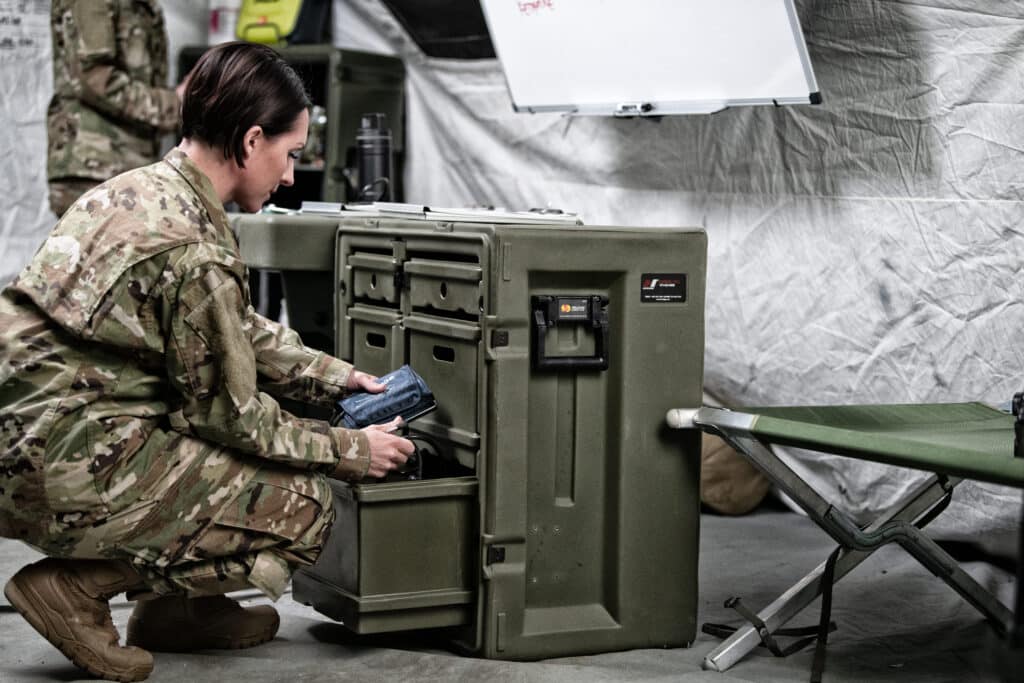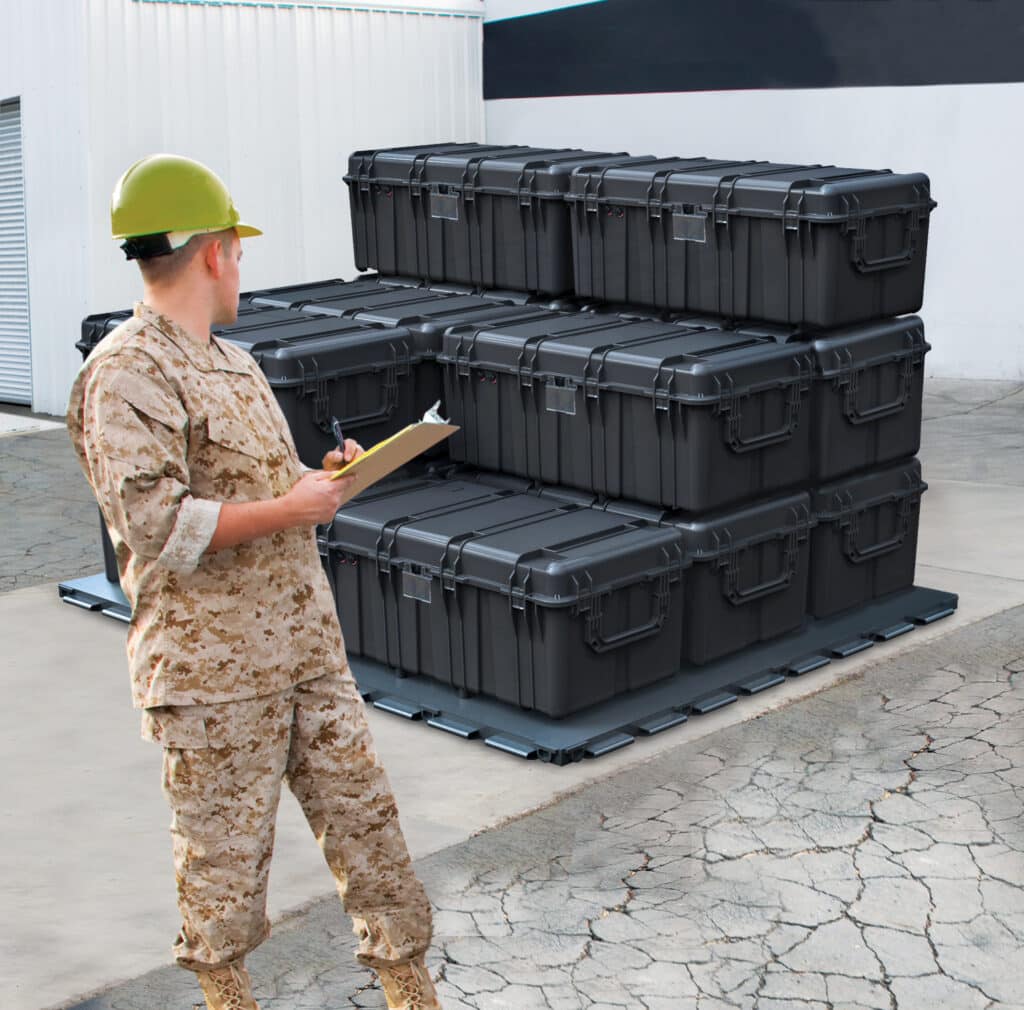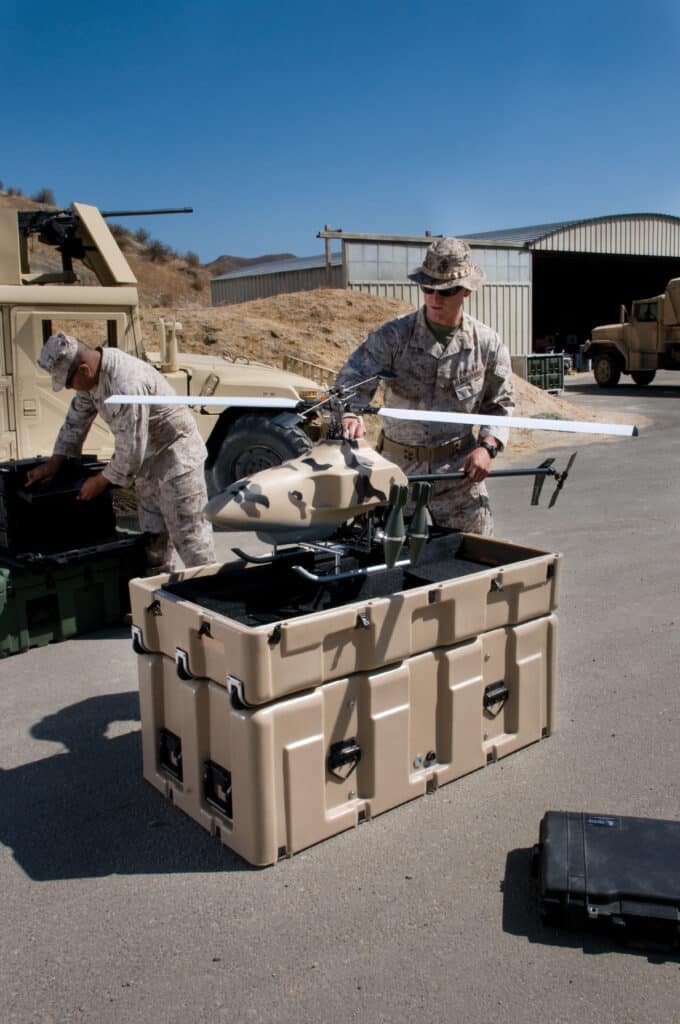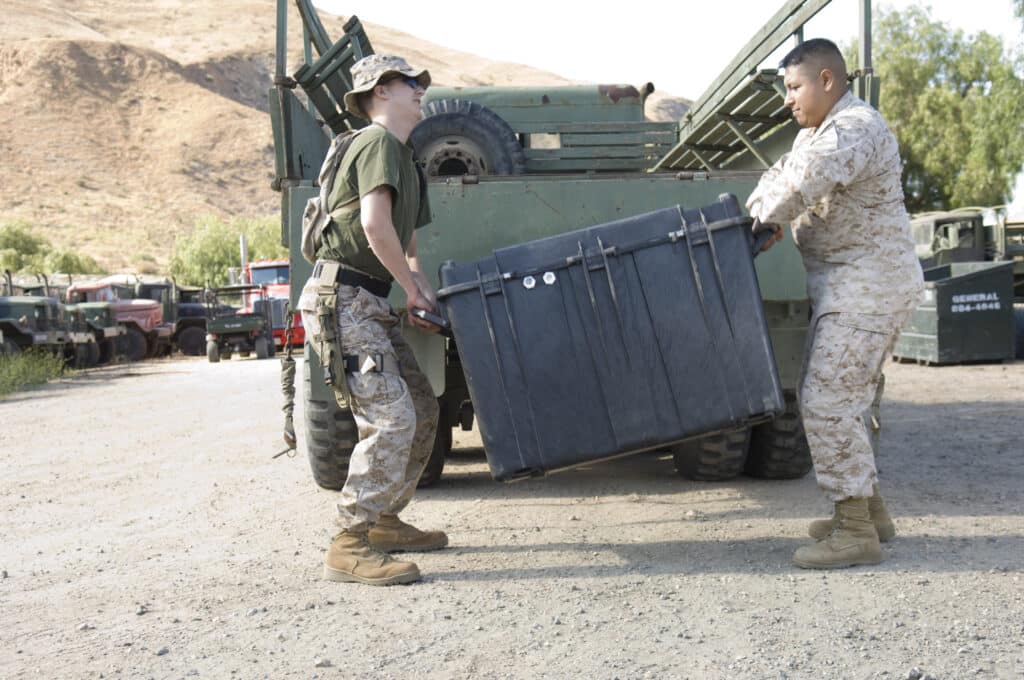
Reusable large equipment cases save money in the long run when compared to wood crates on any program that ships the same item more than a few times.
Signs You Need a Large Equipment Case
There is no formal definition of “large equipment cases.” In practice, a project moves into large-case territory once one of the following is true:
| Exceeds standard catalog dimensions
Long assemblies, tall racks, wide fixtures, and irregular shapes that no stock case fits without wasted space around them. |
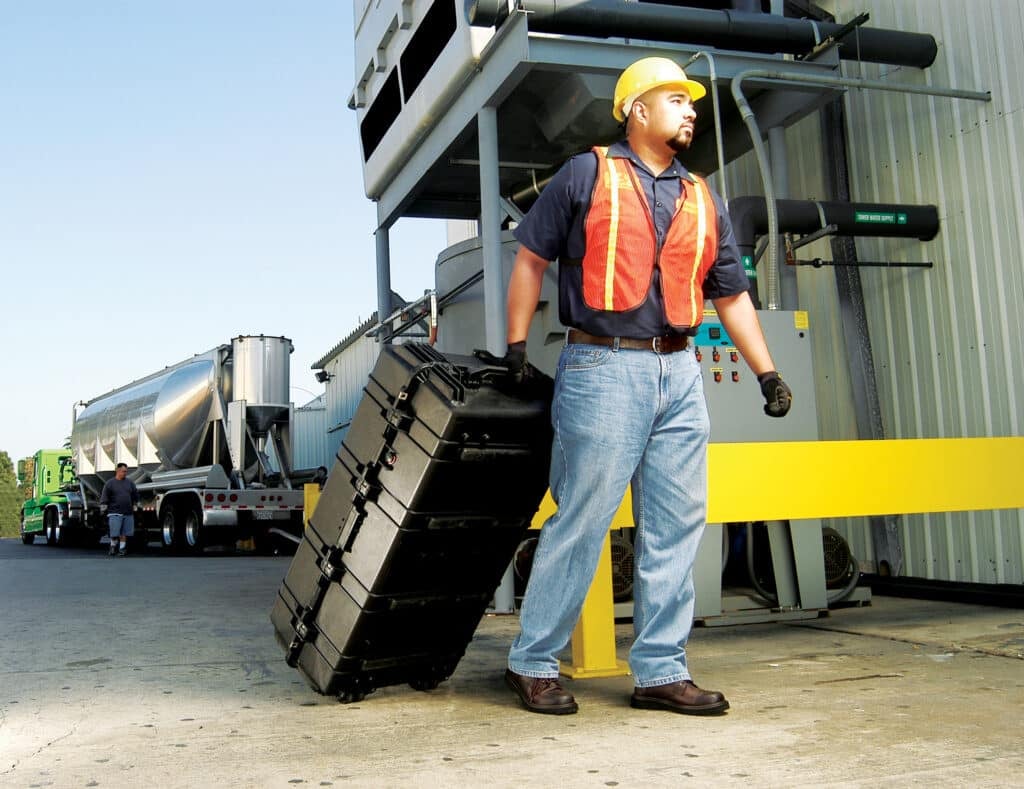
One person cannot lift it safely
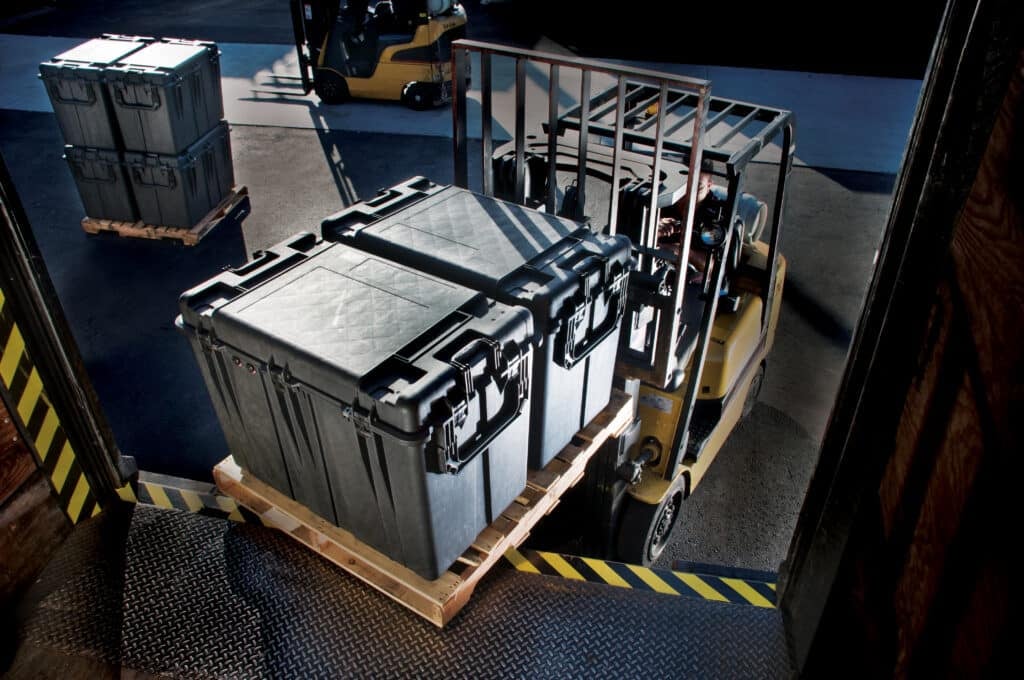
Past a two-person carry, handling drives the design: forklift pockets, lifting rings, and skid bases. |
| Transport clearance starts to matter
When width, height, or axle loading nears a regulatory limit, case dimensions affect routing, permitting, and cost per shipment. |
Heavy for its footprint
A dense assembly on a small bearing area concentrates load, so the cushioning has to be calculated for it. |
Trusted Case Brands We Supply
 |
 |
 |
 |
Reusable Containers Compared to Wood Crating
Wood crating has a lower per-piece price when compared to reusable technical packaging, but the cost savings erode over time.
| Reusable Large Equipment Case | Wood Crate | |
|---|---|---|
| Service life | 100+ trips | 10 trips maximum |
| Impact energy absorbed | About 20% | Under 10% |
| Shipping weight | Lighter at the same capacity | Heavier |
| Labor per shipment | Turn the latches, load, label, ship | Rebuild every time: barrier bag, closure, screws through the lid, steel banding |
What Changes When the Case Gets Large
Scale introduces engineering questions that you don’t need to consider for smaller cases. We work through these during product selection so they don’t show up as problems at the loading dock.
What we work through before case selection or design:
- Handling method
- Center of gravity and load distribution
- Cushioning for concentrated loads
- Transport clearance and permitting
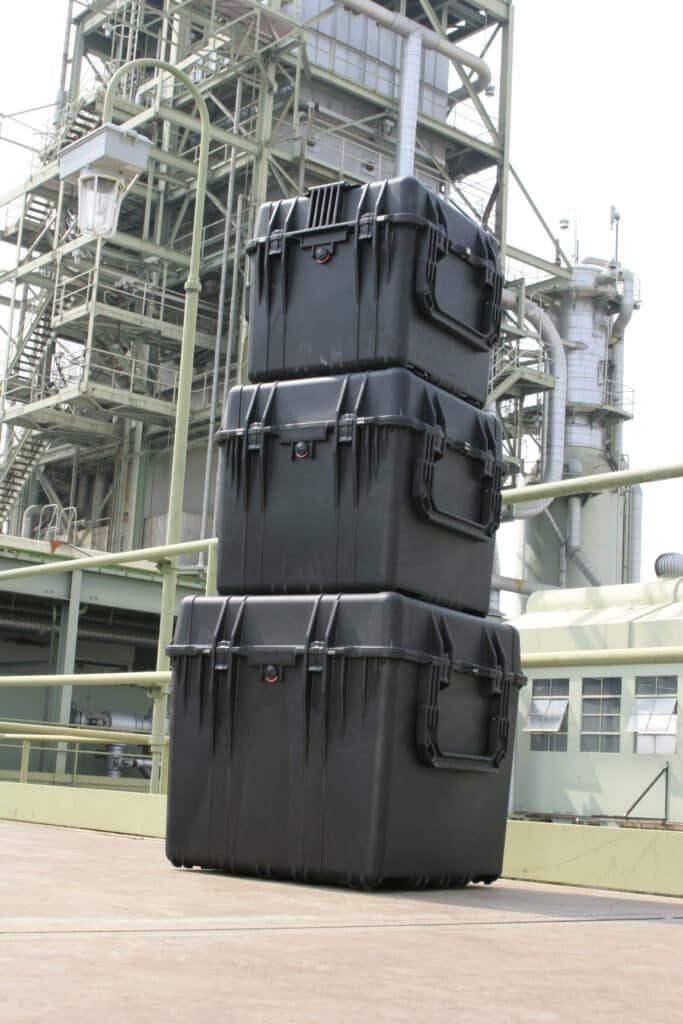
- Stacking, storage, and long-term protection
- Identification and marking
Helpful Information to Accurately Quote Large Cases
- Equipment dimensions, including any projections
- An accurate weight
- Destination and transport method
- Quantity and target date
- Any specification the container has to meet
- Photographs of your product, and a STEP file/CAD drawing if you have one
Large Equipment Cases FAQ
Is a reusable large container worth it for a small quantity?
It depends on how often the equipment ships. A container that makes repeated trips generally justifies itself well before it reaches its service life, while a genuine one-time move may not. Tell us your shipment frequency and we will advise you based on your application.
Can you match an existing container we already use?
Yes. Send the drawings or the container itself and we will work from it, including matching interior layouts across a fleet so field crews find the same arrangement in every unit.
Do large containers still meet MIL-STD requirements?
Yes. Size does not change the standard. We design and build large containers to MIL-STD-810, MIL-STD-2073, MIL-STD-648, and related specifications, with in-house shock and environmental testing available. Our guide to MIL-SPEC packaging compliance covers what MIL-STD-810 and MIL-STD-2073 each govern and where they apply. Want to learn more? Check out our guide to MIL-SPEC packaging compliance.
What about integrating equipment inside the container?
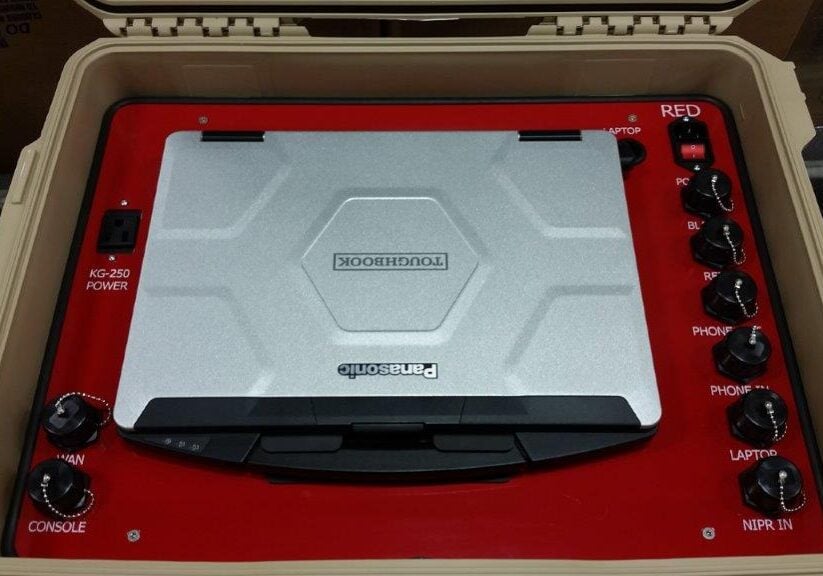
Rack mounting, electronics integration, cable management, and panel work all happen in house through our systems integration capability, so a large container can arrive configured rather than empty. Want more detail? Read more about what we can build into a case before it ships.
How do we handle these once they arrive?
We design for the handling equipment you actually have. Tell us what is available at each end, from forklifts and pallet jacks down to two people and a dolly, and we’ll recommend any needed customization to make logistics as simple as possible.