Drop testing represents the moment of truth for packaging design, yet many programs treat it as a formality rather than an engineering discipline. They assume that adding more foam provides more protection, that standard cases work for sophisticated electronics, or that packaging vendors understand defense requirements without detailed specifications.
They’re wrong. And their programs pay the price.
What Does Drop Testing Actually Measure?
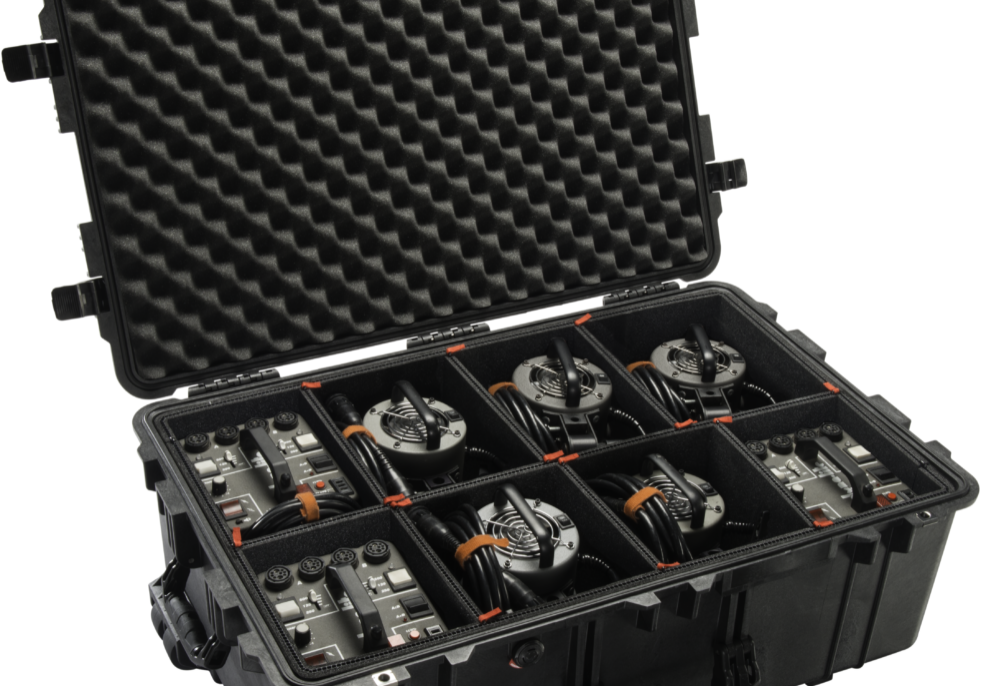
Drop testing evaluates whether your packaging can protect equipment through real-world handling scenarios. The physics are straightforward. When a case hits the ground, the impact creates deceleration forces that transfer through the case structure to the equipment inside. While a polyethylene case will absorb some of the impact, without proper cushioning engineered to your specific equipment’s vulnerability profile, those forces exceed what your electronics can withstand.
Why Do Cases Fail Drop Testing?
Improper Foam Type Selection
The result: equipment that “floats” in excessive foam and still experiences damaging impacts because the foam compresses too much upon contact. Or equipment nested in foam that’s too dense, transmitting shock directly through the cushioning material as if it barely exists. Sometimes, foam alone isn’t appropriate for cushioning some types of equipment—it must be hard-mounted to a plate or tray, and then the fixtures must be cushioned.
Different foam types—polyurethane, polyethylene, cross-linked polyethylene—have vastly different properties for shock absorption, compression set, and environmental resistance. Selecting the wrong material for your specific application means testing failures are inevitable, regardless of how well-designed the case structure might be.
Engineering Mismatch With Handling Environments
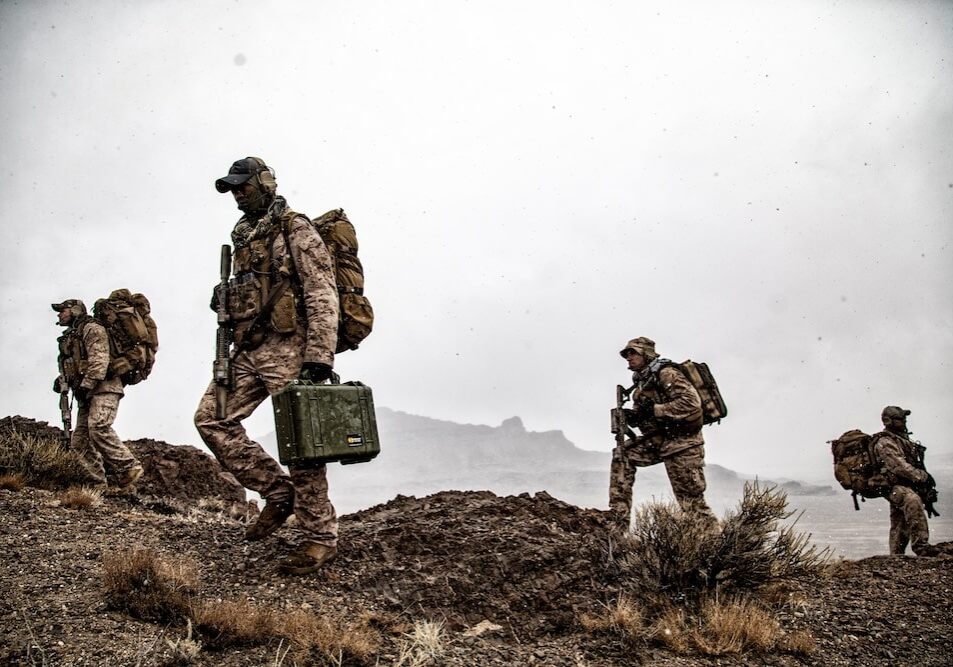
Packaging designed without understanding the complete handling environment ( drop heights, impact surfaces, equipment orientation during transport) can’t protect adequately. When engineers don’t know whether equipment ships in a vehicle with air-ride suspension or a military truck with standard springs, they can’t design appropriate protection.
How Do You Design Packaging and Equipment to Pass Drop Testing?
Effective drop testing begins long before you ship prototypes to a qualification lab. It starts with systematic engineering analysis during preliminary design.
Understand Your Equipment’s Vulnerabilities
What g-forces can your electronics withstand before suffering damage? Different components have different tolerances. A ruggedized military radio might handle more severe impacts, while a sensitive optical system might not be able to withstand much impact at all. Your packaging design must account for the most vulnerable component, not average vulnerability.
Define the Complete Handling Environment
Where will this equipment travel? How will it be transported? What are the realistic drop heights during normal handling? What about worst-case scenarios? At PSI, we work with defense contractors to map entire logistics chains, identifying every transfer point where drops might occur and the maximum expected impact for each scenario.
Select Materials Based on Engineering Requirements
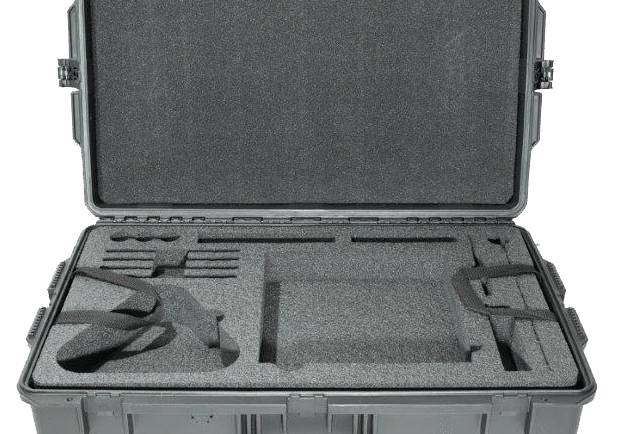
Our 3D modeling approach allows us to test virtual cushioning designs before cutting any foam. We model equipment weight distribution, calculate required deceleration distances, and select foam densities that provide optimal protection for your specific application. This engineering work happens before physical prototyping, catching design flaws when they’re inexpensive to fix.
What’s the Difference Between In-House Testing and Qualification Testing?
Many defense contractors don’t realize there are actually three levels of drop testing, each serving different purposes in the development process:
What is development testing?
Development testing happens in-house during design iterations. At PSI, we conduct preliminary drop testing in our Baltimore facility using our engineering team’s decades of experience to rapidly iterate on cushioning designs. This phase identifies obvious failures quickly and inexpensively, allowing design refinement before investing in formal testing.
What is qualification testing?
Qualification testing validates that your packaging meets specified standards like MIL-STD-810G. This typically happens at accredited third-party labs with calibrated equipment and documented procedures. Qualification testing generates the data you need to prove compliance to customers and program offices. It’s expensive and time-consuming, which is why getting the design right during development testing is critical.
What is production verification testing?
Production verification testing confirms that manufacturing processes maintain design performance. As packaging moves to production, periodic drop testing verifies that foam cutting tolerances, case assembly procedures, and material quality control keep protection performance within specification.
Each testing level requires different approaches. Development testing prioritizes rapid feedback. Qualification testing demands rigorous documentation. Production testing focuses on consistency. Programs that treat all three the same waste resources on over-documentation during development or skip critical verification during production.
How Does Foam Engineering Actually Work?
The myth that “more foam equals more protection” persists because most engineers don’t understand cushioning dynamics. Here’s what actually matters.
Foam Density
Foam density determines how much force is required to compress the material. Low-density foam compresses easily, which sounds protective until you realize it compresses completely during impact, providing zero cushioning for the final deceleration. High-density foam resists compression, which sounds robust until the equipment experiences the full impact force with minimal energy absorption.
The correct foam density for your application depends on equipment weight, drop height, and the equipment’s g-force tolerance. We calculate the required static stress (equipment weight divided by foam contact area) and compare it to the foam’s compression characteristics to identify the density range that provides optimal protection.
Compression Set
Compression set describes how foam responds to repeated impacts. Some foam materials permanently compress after the first impact, losing protective capacity for subsequent drops. Defense equipment that makes multiple trips between depot and field needs foam with excellent compression set characteristics that maintains protection through unlimited cycles.
Environmental Resistance
Environmental resistance affects whether foam maintains its properties through temperature extremes, humidity exposure, and chemical contact. Foam that works perfectly in climate-controlled labs can fail catastrophically in desert heat or arctic cold if material selection didn’t account for operational environments.
PSI’s 3D modeling approach allows us to design cushioning systems that account for all these factors simultaneously. We model equipment geometry, calculate loading patterns, select appropriate foam densities for each equipment zone, and verify the design through simulation before cutting any material. This engineering rigor is why our packaging passes qualification testing on the first attempt rather than requiring expensive redesign cycles.
How Do You Prevent Drop Testing Failures Before They Happen?
The most expensive approach to drop testing is waiting until qualification testing to discover your packaging doesn’t work. The most effective approach involves three systematic steps.
Engage packaging engineering during preliminary design.
Before you’ve finalized equipment dimensions. Before you’ve locked in internal component layouts. When packaging engineers can still influence product design to optimize protection rather than retrofitting cases around equipment that’s difficult to package.
Validate protection through analysis before building prototypes.
Use engineering calculations to verify that proposed foam densities and case structures can protect your equipment. Model worst-case scenarios. Calculate safety margins. Identify potential failure modes through systematic analysis rather than expensive testing.
Conduct development testing to verify assumptions before qualification testing.
Build prototypes. Drop them repeatedly. Learn from failures when they’re cheap to fix. Refine cushioning designs based on actual performance data rather than theoretical calculations.
Programs that follow this systematic approach reach qualification testing with high confidence that the packaging will pass. Programs that skip steps and rush to qualification testing face expensive redesign cycles when failures occur.
The Bottom Line: Is Drop Testing an Expense or an Investment?
Defense contractors who treat drop testing as an engineering discipline rather than a procurement formality make fundamentally different decisions. They engage experienced packaging partners early. They invest in proper cushioning design rather than hoping standard solutions work. They conduct development testing to catch failures before they’re expensive.
The question isn’t whether you can afford proper drop testing engineering. It’s whether you can afford the delays and redesign costs when inadequate packaging fails qualification testing three weeks before your delivery deadline.
If you want to engineer mission success into your next program, connect with our experts at Packaging Strategies to discuss your requirements.