Metrology equipment represents some of the most precise, sensitive, and expensive tools in any industrial or laboratory environment. From coordinate measuring machines and laser trackers to calibrated calipers, micrometers, and optical comparators, these instruments are the backbone of quality assurance. And their accuracy is only as reliable as the care taken to protect them.
Off-the-shelf packaging solutions simply aren’t built with metrology in mind. If you’re still shipping a $40,000 laser interferometer in a generic foam-lined box or transporting calibrated gauges in a soft bag, you’re gambling with both the equipment’s precision and your bottom line. Custom cases for metrology equipment offer a purpose-built alternative. And the investment pays for itself faster than you might think.
Metrology Equipment: What Makes It Different
Before exploring packaging solutions, it’s worth understanding what makes metrology instruments uniquely demanding when it comes to storage and transport.
Extreme Precision Requirements
Metrology equipment is defined by its ability to measure with extraordinary accuracy, often to tolerances measured in microns or even nanometers. Unlike a power tool that either works or it doesn’t, a damaged coordinate measuring machine (CMM) probe with even slightly compromised calibration can give subtly wrong readings, causing you to accept out-of-spec parts or reject perfectly good ones.
Sensitivity to Shock and Vibration
Most metrology instruments contain finely machined components, optical elements, or calibrated mechanisms that are intolerant of sudden impact or sustained vibration. Laser trackers, for example, contain sensitive optical encoders and reflector optics that can be knocked out of alignment by a single impact. Even routine transport over rough roads can lead to cumulative micro-damage that degrades accuracy over time.
Sensitivity to Environmental Conditions
Temperature swings, humidity, and dust are persistent enemies of metrology equipment.
- Thermal expansion affects the dimensions of mechanical components; many precision instruments are rated for use within specific temperature ranges.
- High humidity can cause corrosion on contact surfaces, fogging of optical elements, or swelling in composite materials.
- Dust and debris can compromise measurement surfaces, contaminate optics, or infiltrate sensitive mechanical assemblies.
High Value, High Replacement Costs
A portable CMM arm can run $50,000 to $150,000. Calibrated master gauges, reference standards, and surface plates represent significant capital investments. Obviously, the cost of replacement can be enormous. But even recalibration can cost many times more than the outlay for custom-made technical packaging.
Regulatory and Traceability Requirements
From aerospace and automotive to medical and defense, metrology equipment must be maintained within a documented calibration chain. Damage that necessitates recalibration doesn’t just cost money. It creates gaps in traceability records that can trigger audit findings, shipment holds, or regulatory non-compliance. Protecting your instruments protects your compliance standing as well.
Packaging Approaches: Review Your Options
Understanding the extreme sensitivity of metrology equipment helps us evaluate the range of technical packaging options, and why custom solutions are so often the right choice for these precision instruments. Broadly, here’s a rundown of your choices.
1. Generic Foam-Lined Cases
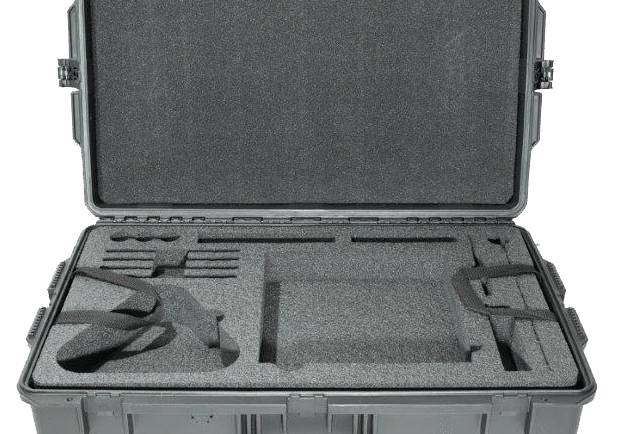
The most common approach is a hard-shell case with a pre-cut or “pick-and-pull” foam interior. These are inexpensive, widely available, and offer basic protection against dust and minor impacts. For metrology equipment, however, generic foam inserts fall short in several ways:
- They don’t hold instruments in precise orientations, leaving room for movement inside the case.
- They don’t account for accessories, cables, or calibration artifacts that need to travel alongside the instrument.
- The foam itself (typically polyurethane) can off-gas over time, potentially affecting sensitive surfaces or optical coatings.
2. Soft Cases and Carrying Bags
Because they offer portability with minimal protection, soft cases are appropriate for instruments that will only be carried short distances in controlled environments. But for any application involving vehicle transport, air freight, or field deployment, they provide virtually no meaningful protection against the shock, vibration, and environmental exposure to which metrology equipment is most vulnerable.
3. Standard Hard Cases with Custom Foam
A step up from generic options, these solutions take a commercially available hard case and fit it with custom-cut foam designed specifically for the instrument. While this improves instrument retention and can accommodate specific accessories, the protection is still limited by the structural properties of the case itself, and the fit may not account for the full range of transport conditions the equipment will face.
4. Custom Technical Packaging for Metrology Equipment
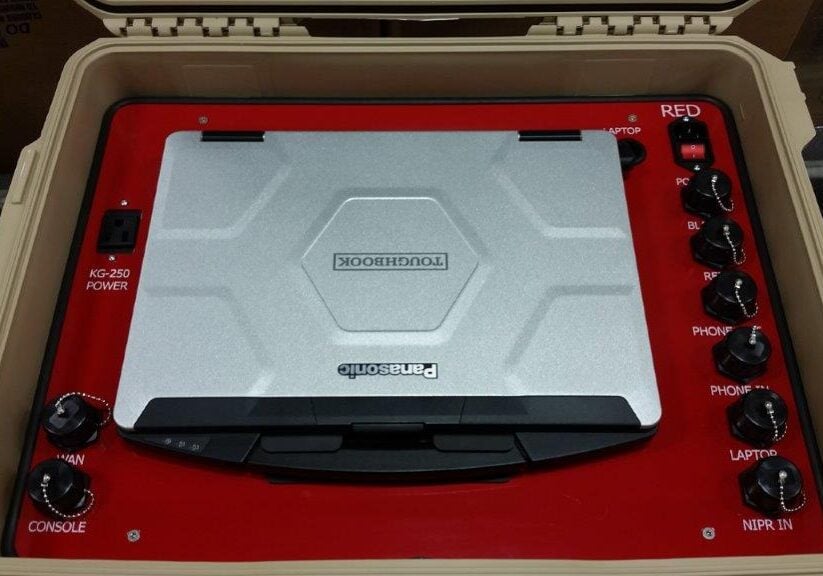
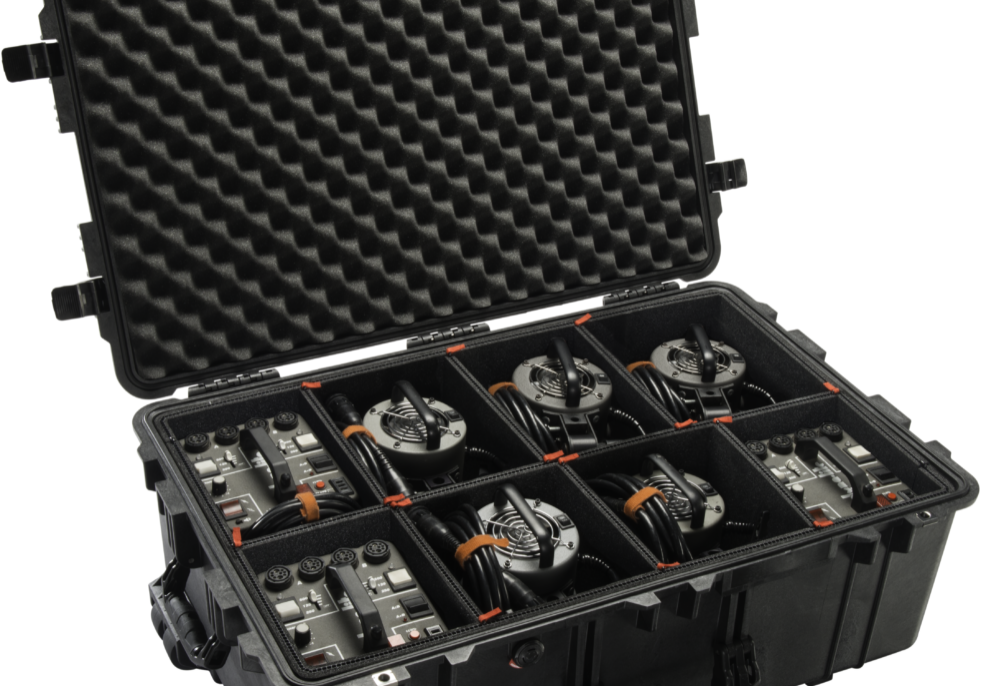
Custom cases are engineered from the ground up for a specific instrument or set of instruments. They combine purpose-designed structural enclosures with custom interior systems that precisely hold every component in its correct position. Further, they can incorporate environmental sealing, pressure equalization valves, shock-mounted sub-frames, humidity control, and anti-static lining, all tailored to the exact requirements of the equipment inside.
How Custom Cases Address the Specific Needs of Metrology Equipment
When properly engineered, custom technical packaging addresses each of the characteristics that make metrology equipment a unique challenge to protect.
- Precision Retention and Zero Movement: Custom foam profiles, machined nests, and molded retention systems hold each component in exactly the right position. Accessories, probes, and calibration artifacts have dedicated locations. Nothing shifts, rattles, or bears unexpected load during transport.
- Shock Isolation and Vibration Damping: Engineered foam durometers or physically isolated mounting frames absorb impulse loads before they reach sensitive components. That isolation can be the difference between arriving in calibration and arriving compromised.
- Environmental Sealing and Climate Control: Built to specific IP ratings, custom cases can keep dust, moisture, and debris out. Pressure equalization valves handle air transport. Desiccant pockets, humidity indicator windows, and active temperature regulation ensure instrument integrity.
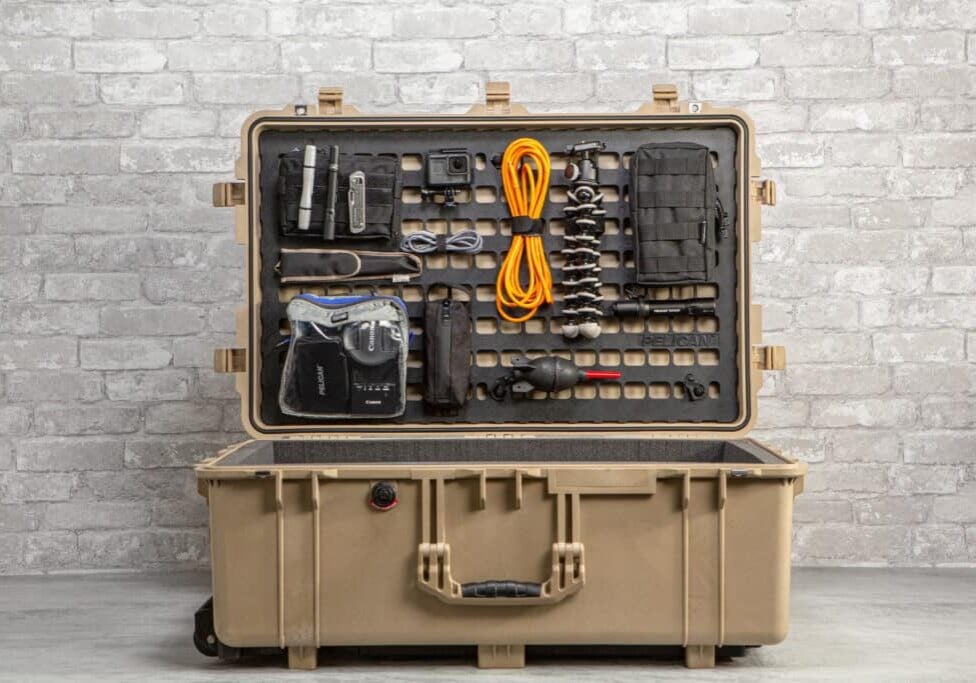
- Complete System Integration: Metrology instruments don’t travel alone; they come with probes, styli, cables, artifacts, certificates, and dongles. A custom case is designed for the whole system, not just the primary instrument, so everything travels together, organized and protected in a single enclosure.
- Professional Presentation and Chain of Custody: A well-engineered case is part of your service, signaling that precision runs through every stage of your workflow. Serialized locks and tamper-evident seals support chain-of-custody documentation, providing a record of correct handling.
The ROI Case for Custom Cases
The cost of custom technical packaging for a precision instrument typically runs from a few hundred dollars for a simple hand tool set to several thousand dollars for a portable CMM or laser tracker system. That figure is easy to scrutinize in a capital budget. But the costs it prevents are harder to see.
Consider the real cost of a single transport incident with an unprotected precision instrument:
- Recalibration cost: Even if the instrument appears undamaged, a significant impact typically requires a full recalibration. For a portable CMM, this can cost $2,000–$8,000 or more, plus downtime.
- Repair cost: Internal damage to encoders, optics, or mechanical assemblies can cost tens of thousands of dollars to repair. And some damage is irreparable.
- Production downtime: If the instrument is part of a production quality control process, its absence while being repaired or recalibrated can halt inspection operations and push back production deadlines.
- Calibration traceability gap: A forced recalibration event creates a break in the calibration history that may need to be disclosed to customers or auditors, with potential contractual or regulatory consequences.
- Replacement cost: If the instrument is beyond repair, the replacement cost for a high-end metrology instrument can be staggering, while lead times for specialized equipment can extend for months.
Against those potential costs, custom cases look less like a luxury and more like common-sense risk management.
Choosing the Right Partner for Custom Cases for Metrology Equipment
Not all custom case manufacturers are equally suited to metrology applications. When evaluating a partner, look for:
- Experience with precision instrument applications. A case maker who routinely works with aerospace or defense metrology customers understands the calibration, traceability, and handling requirements that are specific to this field.
- Engineering capability. The best custom case solutions begin with a real engineering process: dimensional measurement of the instrument, analysis of transport requirements, selection of appropriate materials, and documented testing.
- Material expertise. For example, foam selection matters enormously. Different durometers and formulations offer different levels of shock absorption, off-gassing behavior, and long-term durability.
- Environmental specification capability. If your instruments travel internationally or are deployed in field environments, their case needs to be built to specific standards. Your case partner should be able to specify and certify environmental performance.
Metrology equipment is precise by design and vulnerable by nature. Custom cases preserve calibration integrity, support compliance documentation, reduce total cost of ownership, and reflect a professional commitment to quality. In short, the case that carries your instruments deserves the same level of engineering attention as the instruments themselves.
Ready to Get a Quote for Custom Cases for Metrology Equipment?
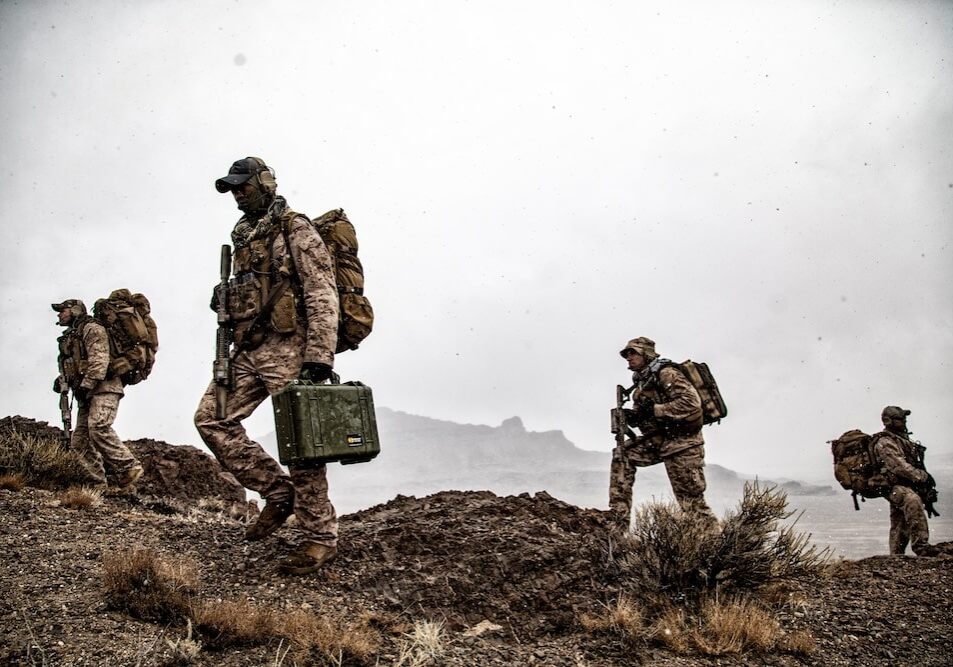
At Packaging Strategies Incorporated, we specialize in custom case design and fabrication for the full range of applications, from rugged field equipment to precision instrument enclosures and Mil-Spec transport cases. We understand that every instrument is different, every application has its own demands, and no two custom case projects are exactly alike.
That’s why we start with a conversation. Whether you’re protecting a single high-value instrument or outfitting an entire fleet of field metrology tools, our team is ready to sit down with you, learn about your equipment and transport requirements, and develop a quote tailored to your specific needs.
Reach out to Packaging Strategies today. Together, we can make sure your precision metrology instruments are protected with the same attention to detail that defines the crucial work they do.
Contact Packaging Strategies:
- Phone: 410-547-7877
- Email: sales@psicases.com
- Start your same-day quote online