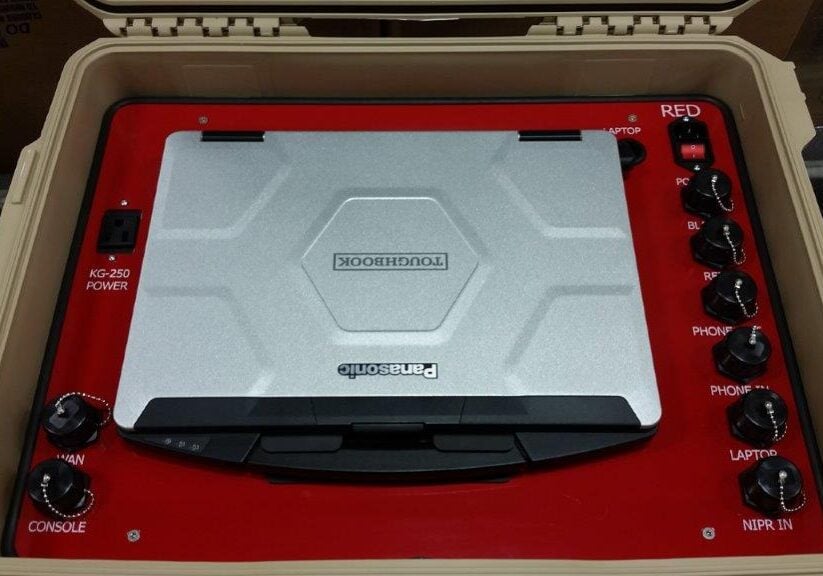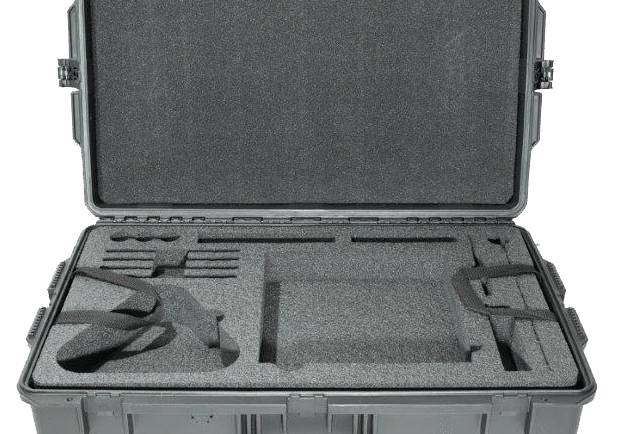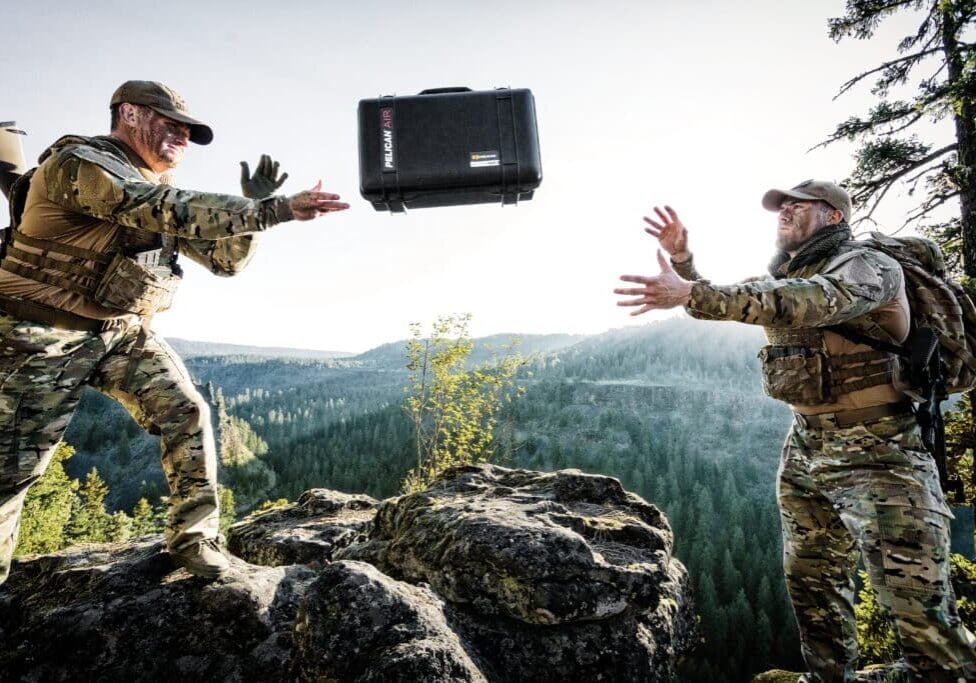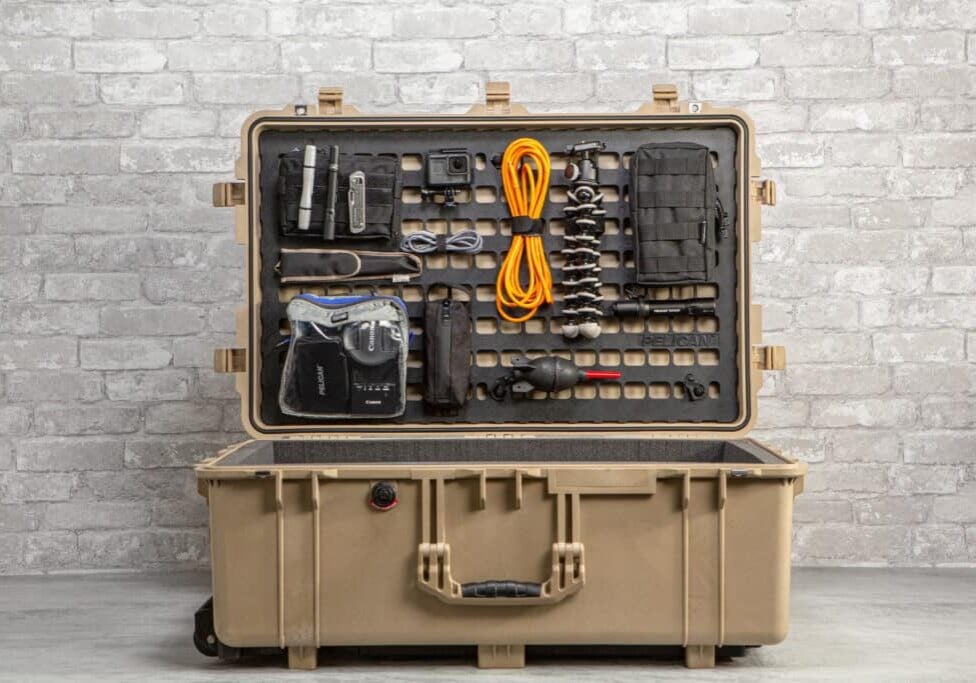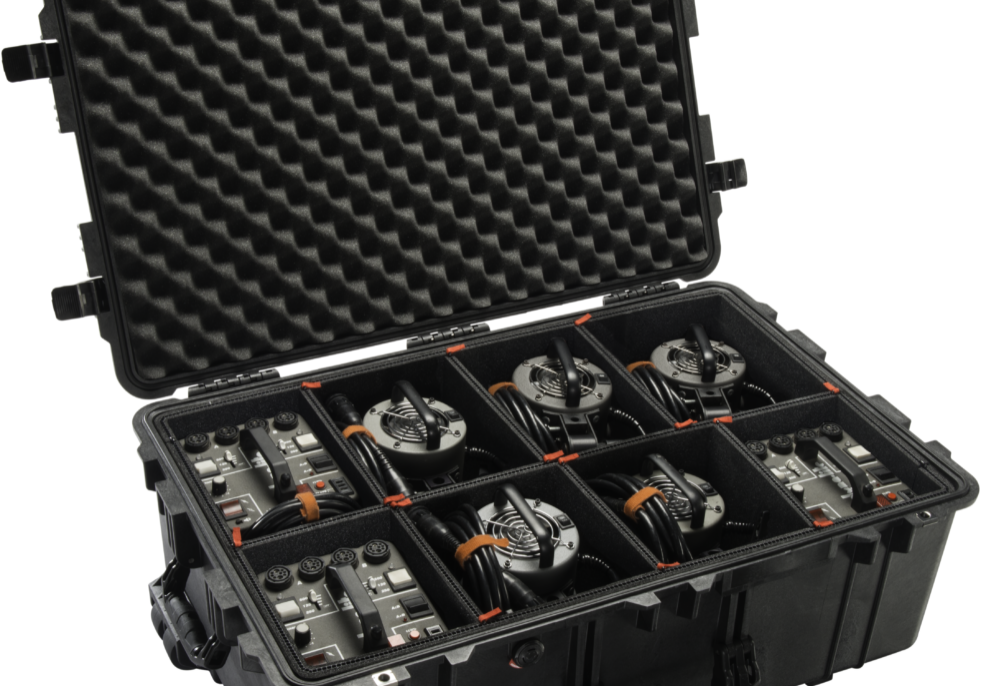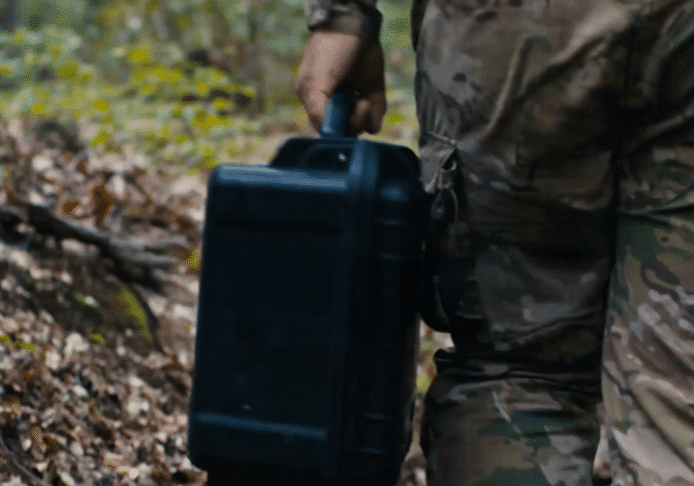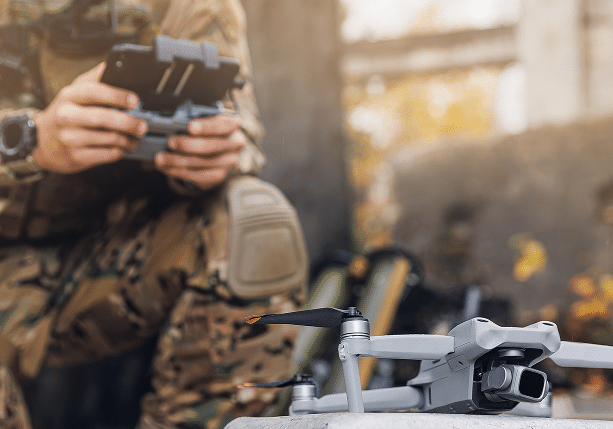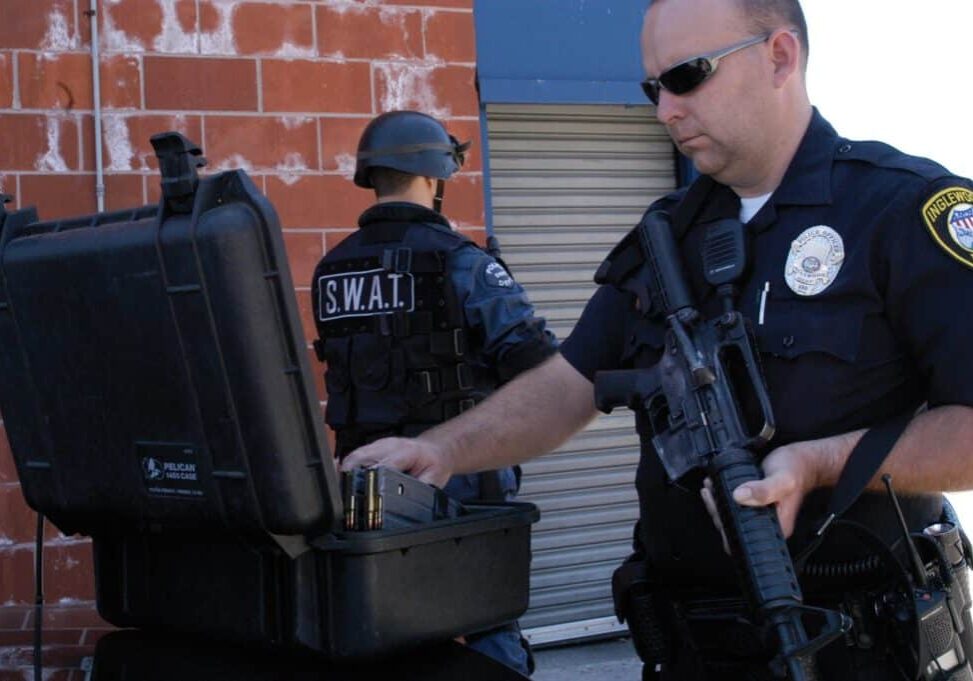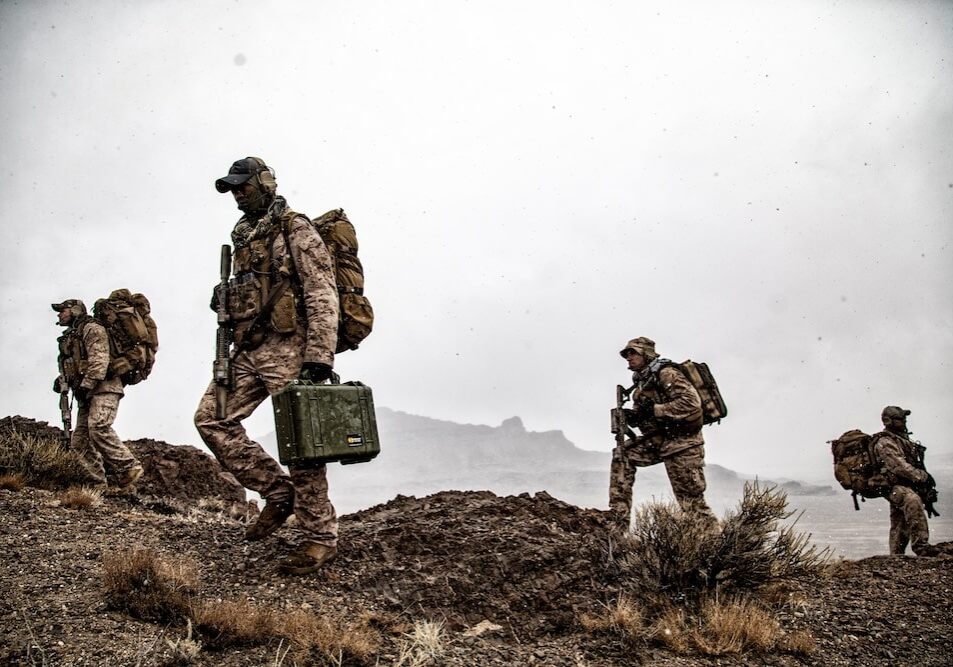
Military and aerospace equipment does not operate in controlled environments. Avionics modules, communications systems, targeting assemblies, depot-level spares, and mission-critical electronics move through storage facilities, aircraft holds, ground transport, and forward deployment zones before ever being powered on. Throughout that life cycle, the transit case is more than a container. It’s a protective system, integral to the fulfillment of that piece of equipment’s mission.
Environmental design guidance in MIL-STD-810H and military packaging requirements defined in MIL-STD-2073-1E establish how equipment must be preserved and protected against environmental exposure. For military and aerospace applications, three threats consistently drive transit case design:
- Dust and airborne particulate intrusion
- Water ingress (rain, immersion, humidity cycling)
- Electrostatic discharge (ESD)
Each must be addressed deliberately within the transit case architecture.
Standards That Shape Transit Case Design
Before evaluating specific hazards, it is important to understand how environmental exposure is defined.
Environmental Test Considerations Under MIL-STD-810H
MIL-STD-810H outlines laboratory methods used to simulate operational environments across the equipment life cycle. While the standard applies to materiel, packaging must support equipment survival through those same conditions. Key environmental stress methods influencing transit case design include:
- Method 510.7 – Sand and Dust
Evaluates a product’s ability to resist the effects of blowing sand and dust, including abrasion, clogging, and infiltration. - Method 506.6 – Rain
Assesses resistance to rain, wind-driven rain, and water penetration to ensure the item maintains performance during and after exposure. - Method 507.6 – Humidity
Tests how well equipment withstands prolonged exposure to high humidity, including potential corrosion, swelling, or degradation. - Method 512.6 – Immersion
Determines whether the item can survive temporary submersion in water without leakage or functional failure. - Method 514.8 – Vibration
Evaluates the ability to endure vibration stresses encountered during transport, handling, and operational use. - Method 516.8 – Shock
Assesses resistance to sudden mechanical shocks, such as drops, impacts, or explosive events. - Method 500.6 – Low Pressure (Altitude)
Tests performance and structural integrity under reduced air pressure conditions experienced at high altitudes.
These methods reinforce a core engineering principle: packaging must be aligned with the equipment’s life-cycle environmental profile — including storage, transportation, and deployment phases.
Military Preservation & Packaging Requirements
MIL-STD-2073-1E governs preservation methods, barrier materials, desiccant use, cushioning requirements, and packing levels for military systems and components. Rather than addressing hazards in isolation, this standard defines a wide range of structured preservation methods such as:
- Water vapor-proof protection (Methods 41–55)
- Desiccant integration (Method 50 series)
- ESDS packaging requirements
- Shock and vibration absorption criteria
- Rigid sealed container configurations
In many military and aerospace programs, these preservation methods are integrated directly into reusable transit case systems.
The Silent Threat of Dust and Debris
Fine particulate intrusion poses a serious risk to military and aerospace equipment. In operational environments, airborne dust can infiltrate connectors, optical assemblies, cooling pathways, and precision mechanical interfaces.
Under Method 510.7 of MIL-STD-810H, equipment may be subjected to blowing dust and sand conditions intended to replicate field exposure. And the transit cases that carry that equipment must prevent particulate ingress during transport and staging in comparable, real-world environments.
Understanding IP Ratings for Dust Protection
Ingress Protection (IP) ratings provide a standardized framework for evaluating enclosure resistance. In the format IPXY, X (the first digit) defines the required protection against solid particles. For example:
- IP5X – Dust protected (limited ingress permitted; no harmful accumulation)
- IP6X – Dust tight (no particulate ingress allowed)
For sensitive aerospace electronics and field-deployable systems, IP6X-level sealing is typically required.
Dust-Proofing in Transit Case Engineering
Effective dust protection begins with enclosure design and seal integrity. High-performance transit cases often incorporate:
- Continuous perimeter gaskets (silicone, EPDM, neoprene)
- Tongue-and-groove lid geometry
- Compression latching systems to maintain uniform seal pressure
- Filtered pressure equalization valves
- Molded construction with minimized seam exposure
In some configurations, sealed internal compartments or barrier bags may supplement external enclosure protection when equipment sensitivity demands additional redundancy.
Water Ingress: More Than Just Moisture
Water exposure in military and aerospace logistics can occur at any time during transport, staging, and deployment. Environmental stressors defined in MIL-STD-810H include:
- Wind-driven rain (Method 506.6)
- Humidity cycling (Method 507.6)
- Temporary immersion (Method 512.6)
Moisture intrusion can compromise electrical insulation resistance, corrode metallic interfaces, and degrade connectors and wiring assemblies. Even condensation formed during rapid temperature transitions can present operational risk.
Understanding the IP Ratings for Water Protection
In the format IPXY, Y (the second digit) defines the required liquid ingress resistance:
- IPX4 – Protection from splashing water
- IPX6 – Protection from powerful water jets
- IPX7 – Protection during temporary immersion (up to 1 meter)
- IPX8 – Protection during prolonged immersion (application-specific depth)
In military transit case applications IP67 is commonly specified for portable electronic systems, while prolonged immersion-capable enclosures may be required for naval or expeditionary operations.
Water Mitigation Strategies in Transit Case Engineering
Water resistance is achieved through a combination of enclosure design and preservation techniques. A well-engineered transit case may include:
- Molded watertight lid interfaces
- Compression-set-resistant gasket materials
- Sealed fastener systems
- Hydrophobic vent membranes for pressure equalization
- Water vapor-proof barrier bags (per Methods 41–55 in MIL-STD-2073-1E)
- Desiccant integration (Method 50 series) for humidity-sensitive equipment
For long-term storage or depot-level preservation, rigid sealed containers with desiccant provide a controlled internal environment aligned with military packaging requirements.
Static Electricity: The Invisible Hazard
Electrostatic discharge is particularly concerning for modern aerospace electronics and mission systems. ESDS (Electrostatic Discharge Sensitive) components can be damaged by voltage levels undetectable to personnel. Military preservation guidance under MIL-STD-2073-1E requires specific packaging methods for ESDS items.
ESD Protection in Transit Case Engineering
ESD mitigation must be engineered into both materials and configuration. Transit case solutions may incorporate:
- Conductive or static-dissipative interior liners
- ESD-safe cushioning materials
- Metallized shielding barrier bags
- Ground-able rack structures within the enclosure
- Insulating foam for isolation from direct contact with ESDS hardware
These systems provide controlled dissipation pathways and electrostatic shielding throughout transport and handling.
Transit Case Protection Systems: Combination is the Key
Transit cases supporting military and aerospace programs must address environmental hazards in combination, not isolation. A complete protective system typically integrates:
- Shock and vibration attenuation aligned with fragility factor
- IP-rated environmental sealing
- Internal cushioning engineered to payload geometry
- Military-prescribed preservation methods
- Static control where required
Environmental exposure is defined through life-cycle profiling. Transit case design must reflect those defined conditions, whether equipment remains with its container in the field or is transported to depot-level storage.
Packaging Strategies Incorporated: Transit Case Engineering for Defense and Aerospace Applications
Packaging Strategies designs integrated transit case solutions that meet environmental exposure considerations defined in MIL-STD-810H and Military packaging and preservation methods defined in MIL-STD-2073-1E.
By combining enclosure engineering, cushioning design, barrier protection, and ESD mitigation, Packaging Strategies Incorporated develops transit case systems that serve as critical safeguards for mission readiness, protecting sensitive military and aerospace equipment throughout storage, transport, and deployment.
Since 1990, Packaging Strategies Incorporated has supported the defense and aerospace community. Our facilities combine in-house design, prototyping, and manufacturing capabilities with technical engineering expertise specifically developed for MIL-SPEC applications.
Our approach centers on technical conversations between engineers who understand defense requirements. Whether you’re working with MIL-STD-810, MIL-STD-2073-1, or other military specifications, Packaging Strategies Incorporated’s team can guide you through test selection, packaging design validation, and quality assurance protocols that ensure your mission-critical equipment arrives ready for deployment.
As an ISO 9001:2015 certified company familiar with government contracting requirements, Packaging Strategies Incorporated understands the documentation, compliance standards, and quality expectations that defense programs demand. More importantly, we provide the rapid response times and technical qualification that keep programs on schedule without compromising protection requirements.
Ready to discuss your MIL-SPEC packaging requirements? Contact Packaging Strategies Incorporated at 888-774-7557 or info@psicases.com to speak with our technical team about your defense packaging needs.
Packaging Strategies Incorporated: Delivering rugged cases engineered to your payload’s weight, size, and vulnerability with shock and environmental testing available. Serving defense contractors, aerospace companies, and government agencies since 1990.